Not married – death benefit unfairness?
Legal Services

The issues faced by cohabitants upon the end of their relationship is a topic that I have covered many times, but the decision of the Supreme Court in the appeal of Siobhan McLaughlin in August has highlighted yet another area where cohabitants may find themselves in difficulty.
Ms McLaughlin was in a relationship with her partner, John Adams, for 23 years until he sadly died at the beginning of 2014. The couple had four children together, aged 19, 17, 13 and 11 and had only not married because Mr Adams had promised his first wife that he would never remarry. Had they been married this would be considered a long marriage by any family lawyer’s measure.
When a spouse dies, as long as they have made enough National Insurance contributions, the surviving spouse can claim:
- lBereavement Payment, and
- Widowed Parent’s Allowance, in relation to any children they claim child benefit for.
When Ms McLaughlin’s partner died, she attempted to make these claims but they were refused on the basis that she was not a ‘widow’, as the couple had not been married.
Ms McLaughlin applied for a judicial review of that decision, arguing that it was incompatible with the European Convention on Human Rights (ECHR), as she was being discriminated against as a result of her marital status.
The High Court dealt with each claim separately. They decided that Ms McLaughlin was entitled to claim Widowed Parent’s Allowance because the relevant relationship was between the parents and the children. Clearly, marriage does not effect that relationship.
However, the High Court decided that Ms McLaughlin wasn’t entitled to claim Bereavement Payment as the relevant relationship was between Ms McLauglin and Mr Adams and Bereavement Payment required them to be married. The High Court said that the promotion of marriage and civil partnership was a ‘legitimate aim’ of the legislation, so the difference in treatment was justified.
Ms McLaughlin appealed to the Supreme Court who upheld the decision of the High Court and agreed with their judgment. But, Lady Hale made it clear that, unless there is some reform of the benefits system, each one of these cases would need to be considered on a case by case basis. Therefore, you must be married to be entitled to Bereavement Payment but you do not need to be married to be entitled to Widowed Parents Allowance.
For many cohabitants, this will be a hard pill to swallow, particularly as the Government seems to pick and choose when their relationship will be recognised as being equivalent to marriage for the purpose of benefits. For instance, for many means tested benefits cohabitants are treated in exactly the same way as married couples.
If you are a cohabitant then it is important that you fully understand your legal rights in relation to your partner, and children if relevant, upon the breakdown of your relationship or the death of one of you.
We offer a range services and work with you to find the best outcome. View Our Services.
Our Latest News



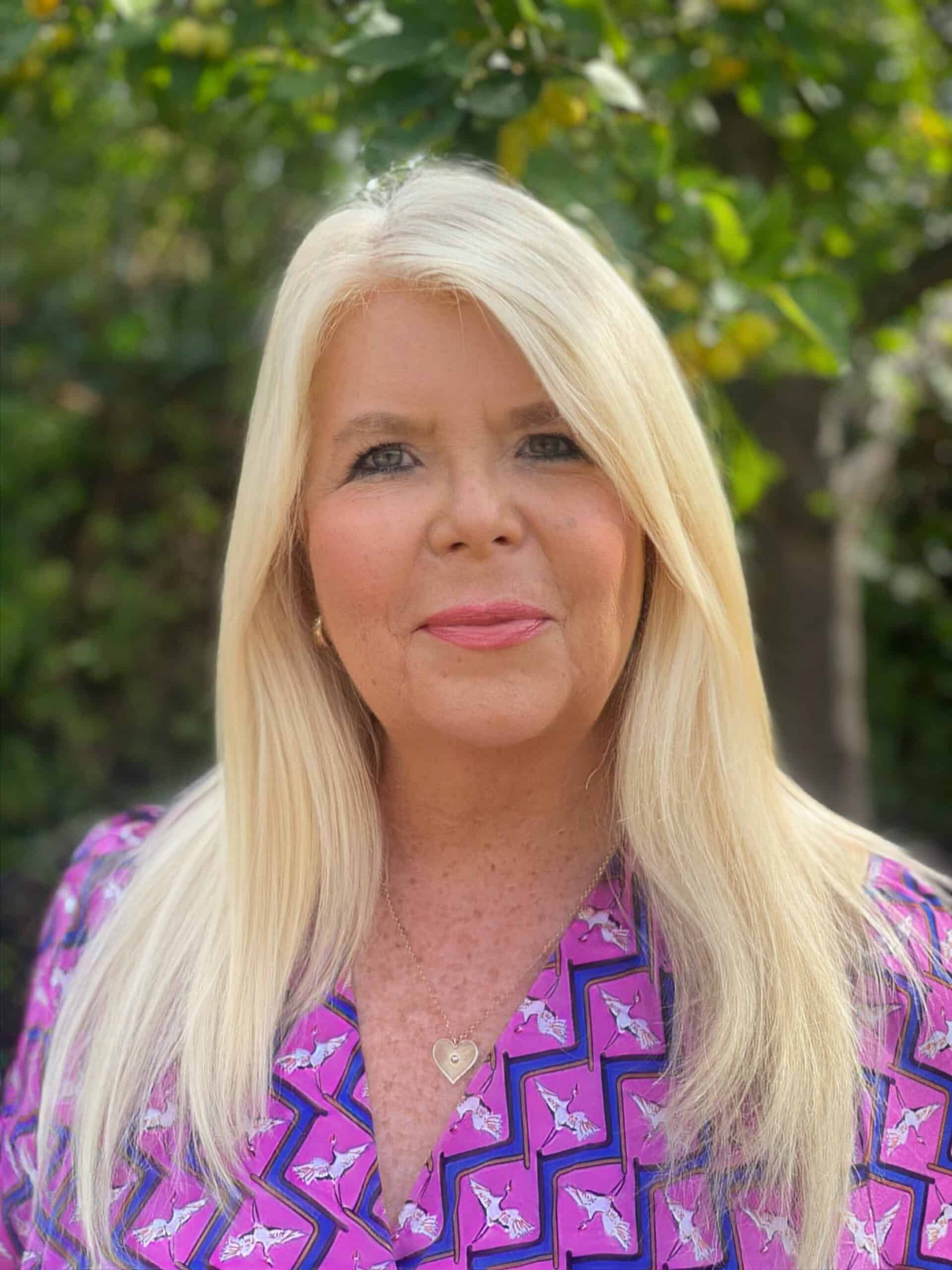
Senior Family Law Partner & Director – SRA No. 258177
Pauline Purcell is the Managing Director and founder of Purcell Solicitors, a specialist family law firm based in Milton Keynes. She qualified as a solicitor and built her early career at Fennemores, a top-100 legal firm in central Milton Keynes, where she became a partner and head of the family department before establishing Purcell Solicitors in 2005.
She has specialised exclusively in family law for over 30 years. Her qualifications span several disciplines: she is a solicitor, a trained mediator, a collaborative lawyer, and a family arbitrator, and she was among the first collaborative lawyers in England. She holds a law degree from the University of Buckingham, where she also lectured on the part-time undergraduate law programme.
Chambers and Partners has ranked Pauline as a Band 1 practitioner for Family/Matrimonial in the Thames Valley for several years. The 2025 Chambers and Partners Guide describes her as “incredibly astute and excels at getting to the heart of the issue,” “robust and frighteningly clever,” and “a rock and massive support” to clients throughout their cases. She is also listed as a Leading Lawyer by Wiselaw.
Her particular expertise lies in high-value financial cases, including those involving business assets, pensions, and complex or international elements. She is a long-standing member of Resolution and is committed to reaching negotiated agreements wherever possible, though she regularly represents clients in court and family arbitration when proceedings become necessary.
Pauline is regulated by the Solicitors Regulation Authority (SRA number: 258177). She can be contacted at pauline@purcellsolicitors.co.uk.